Implants Can Provide Denture Stability
Dental implants can be effective at anchoring full or partial dentures that may be ill-fitting or loose. There are many treatment options available which can offer natural-looking, long-term restorations to improve both the appearance and functionality of your teeth. Dr. Hashemian wants to help enhance your confidence, biting efficiency, and eating security that can often be lost when dentures are placed.
Request an AppointmentWhat Is It?
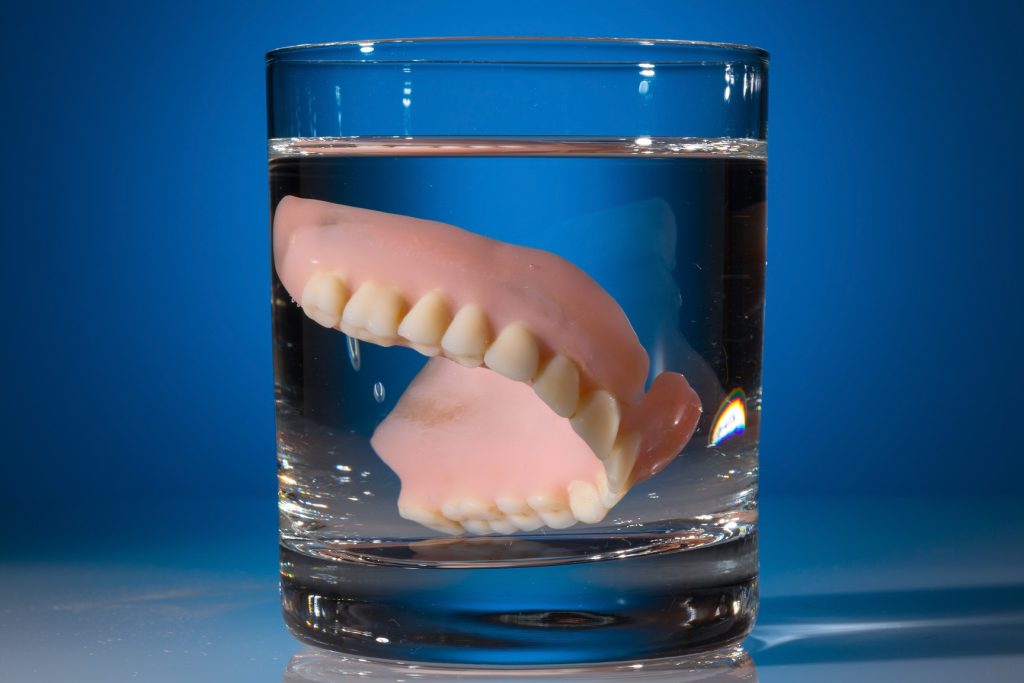
An implant-supported denture is a type of overdenture that is supported by and attached to implants. A regular denture rests on the gums, and is not supported by implants. An implant-supported denture is used when a person doesn’t have any teeth in the jaw, but has enough bone in the jaw to support implants. An implant-supported denture has special attachments that snap onto attachments on the implants. Implant-supported dentures usually are made for the lower jaw because regular dentures tend to be less stable there. Usually, a regular denture made to fit an upper jaw is quite stable on its own and doesn’t need the extra support offered by implants. However, you can receive an implant-supported denture in either the upper or lower jaw. You should remove an implant-supported denture daily to clean the denture and gum area. Just as with regular dentures, you should not sleep with the implant-supported dentures at night. Some people prefer to have fixed (permanent) crown and bridgework in their mouths that can’t be removed. Your dentist will consider your particular needs and preferences when suggesting fixed or removable options.
Dental implants can be effective at anchoring full or partial dentures that may be ill-fitting or loose. There are many treatment options available which can offer natural-looking, long-term restorations to improve both the appearance and functionality of your teeth. Dr. Hashemian wants to help enhance your confidence, biting efficiency, and eating security that can often be lost when dentures are placed.
How Does It Work?
There are two types of implant-supported dentures: bar-retained and ball-retained. In both cases, the denture will be made of an acrylic base that will look like gums. Porcelain or acrylic teeth that look like natural teeth are attached to the base. Both types of dentures need at least two implants for support.
- Bar-retained dentures – A thin metal bar that follows the curve of your jaw is attached to two to five implants that have been placed in your jawbone. Clips or other types of attachments are fitted to the bar, the denture or both. The denture fits over the bar and is securely clipped into place by the attachments.
- Ball-retained dentures (stud-attachment dentures) – Each implant in the jawbone holds a metal attachment that fits into another attachment on the denture. In most cases, the attachments on the implants are ball-shaped (“male” attachments), and they fit into sockets (“female” attachments) on the denture. In some cases, the denture holds the male attachments and the implants hold the female ones.
Implant-Supported Denture FAQs
What are implant-supported dentures?
Implant-supported dentures are overdentures that attach to dental implants rather than resting solely on the gums. They provide increased stability, comfort, and function, especially for patients who have difficulty with loose or ill-fitting traditional dentures.
How do implant-supported dentures work?
Implants placed in the jawbone act as anchors for the denture. Depending on the type—bar-retained or ball-retained—the denture securely snaps or clips into place, reducing movement and improving biting efficiency.
Who is a good candidate for implant-supported dentures?
Patients who have lost all or most of their teeth and have enough jawbone structure to support implants are ideal candidates. Both upper and lower jaws can be treated, although the lower jaw is most commonly recommended for added support.
What is the difference between bar-retained and ball-retained dentures?
Bar-retained dentures attach to a thin metal bar connected to multiple implants, while ball-retained dentures use ball-and-socket components for stability. Both systems help secure the denture and allow for improved comfort and function.
Do implant-supported dentures need to be removed?
Yes. Removable implant-supported dentures should be taken out daily for cleaning, just like traditional dentures. Patients who want a non-removable option may qualify for fixed implant bridges instead.
Are implant-supported dentures better than traditional dentures?
Most patients experience improved comfort, enhanced chewing ability, and greater confidence with implant-supported dentures. Unlike traditional dentures, they are less likely to slip and provide a more natural-feeling restoration.